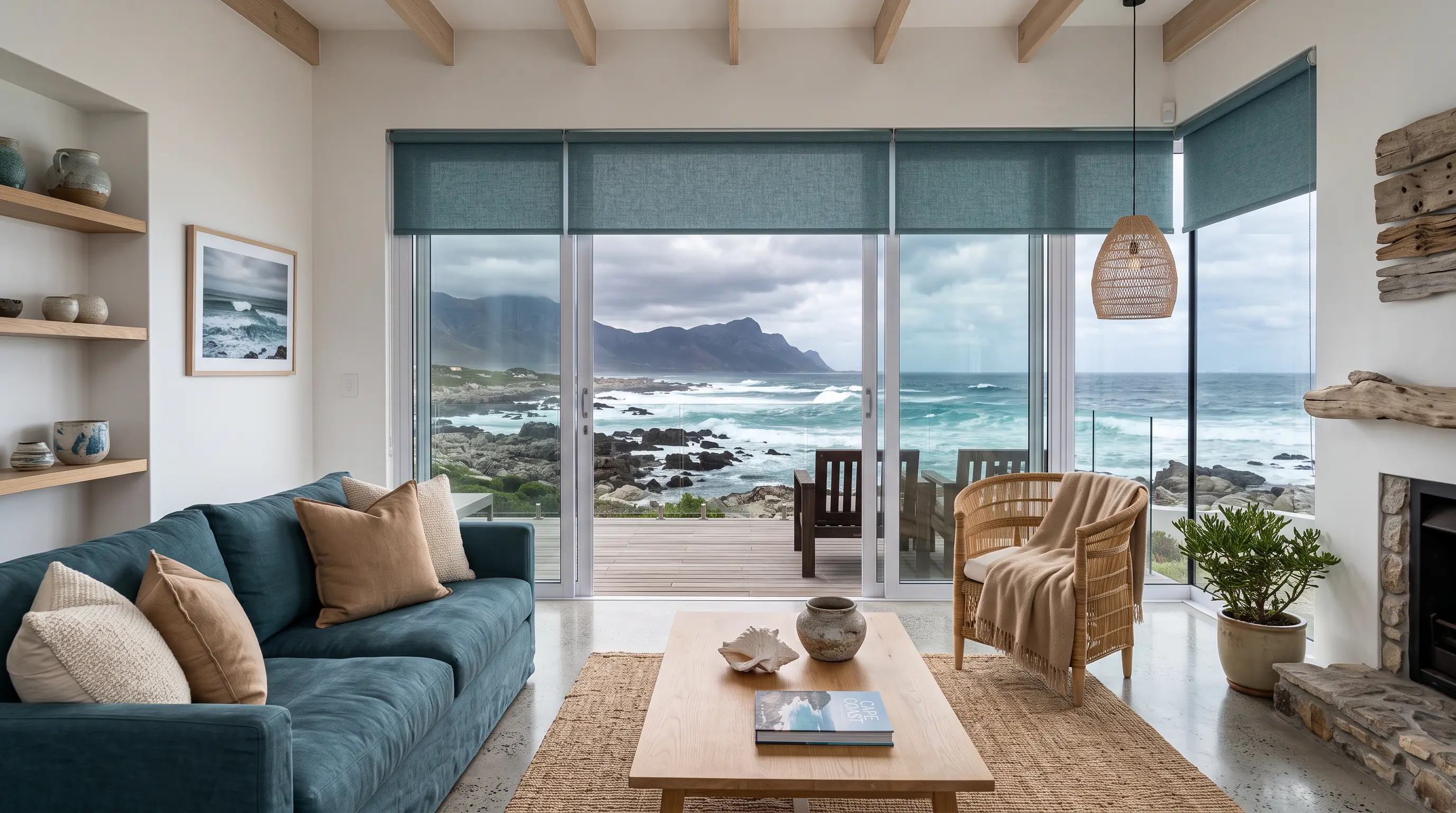
Kommetjie · Cape Peninsula · Cape Town
Blinds for a Kommetjie house that keep their nerve when the south-easter comes over the dunes.
Every window at the Kom gets the same weather; not every window needs the same answer. We measure in your home, spec for wind and salt first, and put the price per window in writing.
- Free in-home measure & written quote
- Wind-rated exterior shading, standard
- Child-safe as standard
Reading the village
- Two winds, no hidingSummer belongs to the south-easter, winter to the north-westerly fronts. A village this low and open never gets a properly sheltered side.
- Salt travels flat hereNo cliff lifts Kommetjie above the spray line. Hardware two streets back from Long Beach corrodes almost as keenly as hardware on it.
- The park at the fenceWhere a garden meets Table Mountain National Park or the dune reserve, exterior work needs a more careful eye — we check before quoting, not after.
Twelve ways to shade a house at the Kom
Run your eye down the list; run your cursor over a line to see the product in a room like yours. Everything is made to measure, and the free measure settles which line your windows actually need. The external lines — external venetians, roller shutters and zip screens — are the premium end of the list, and on dune-facing glass they are what we lead with.
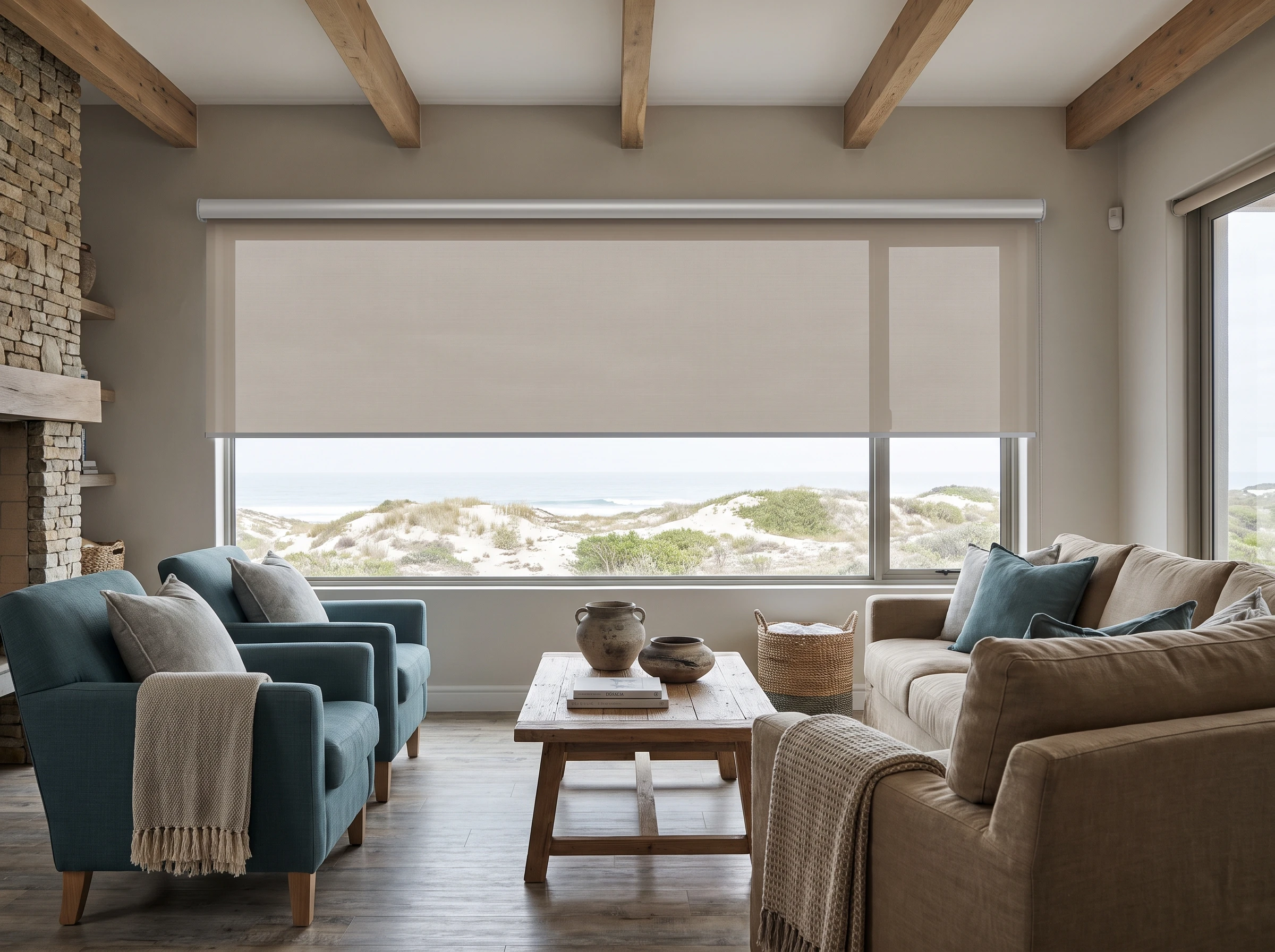 Day/night blinds
Two fabrics on one tube: the dune view by day, privacy the moment the lights come on.
Day/night blinds
Two fabrics on one tube: the dune view by day, privacy the moment the lights come on.
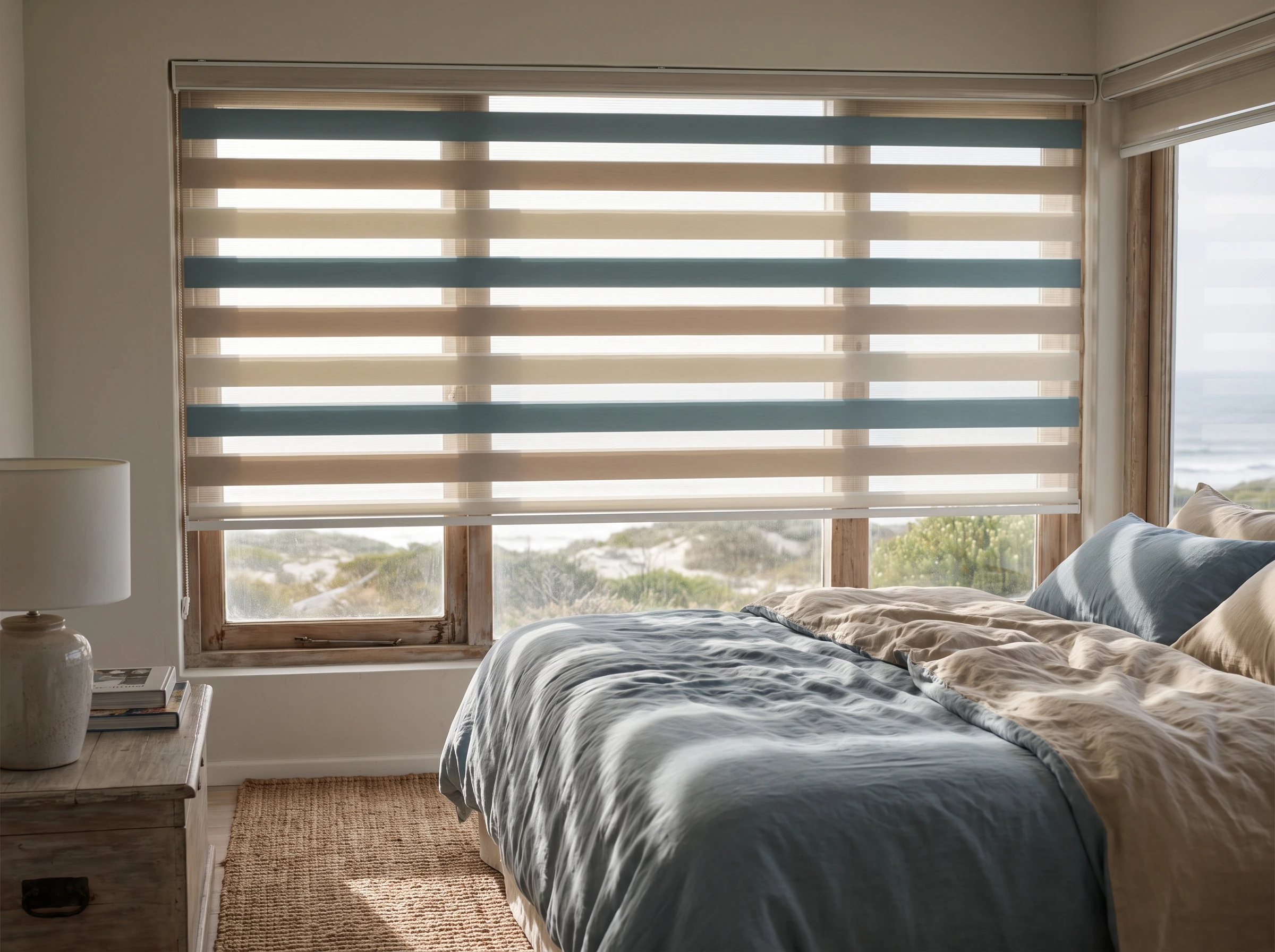 Venetian blinds
Powder-coated aluminium slats for the kitchens and bathrooms that live closest to the salt.
Venetian blinds
Powder-coated aluminium slats for the kitchens and bathrooms that live closest to the salt.
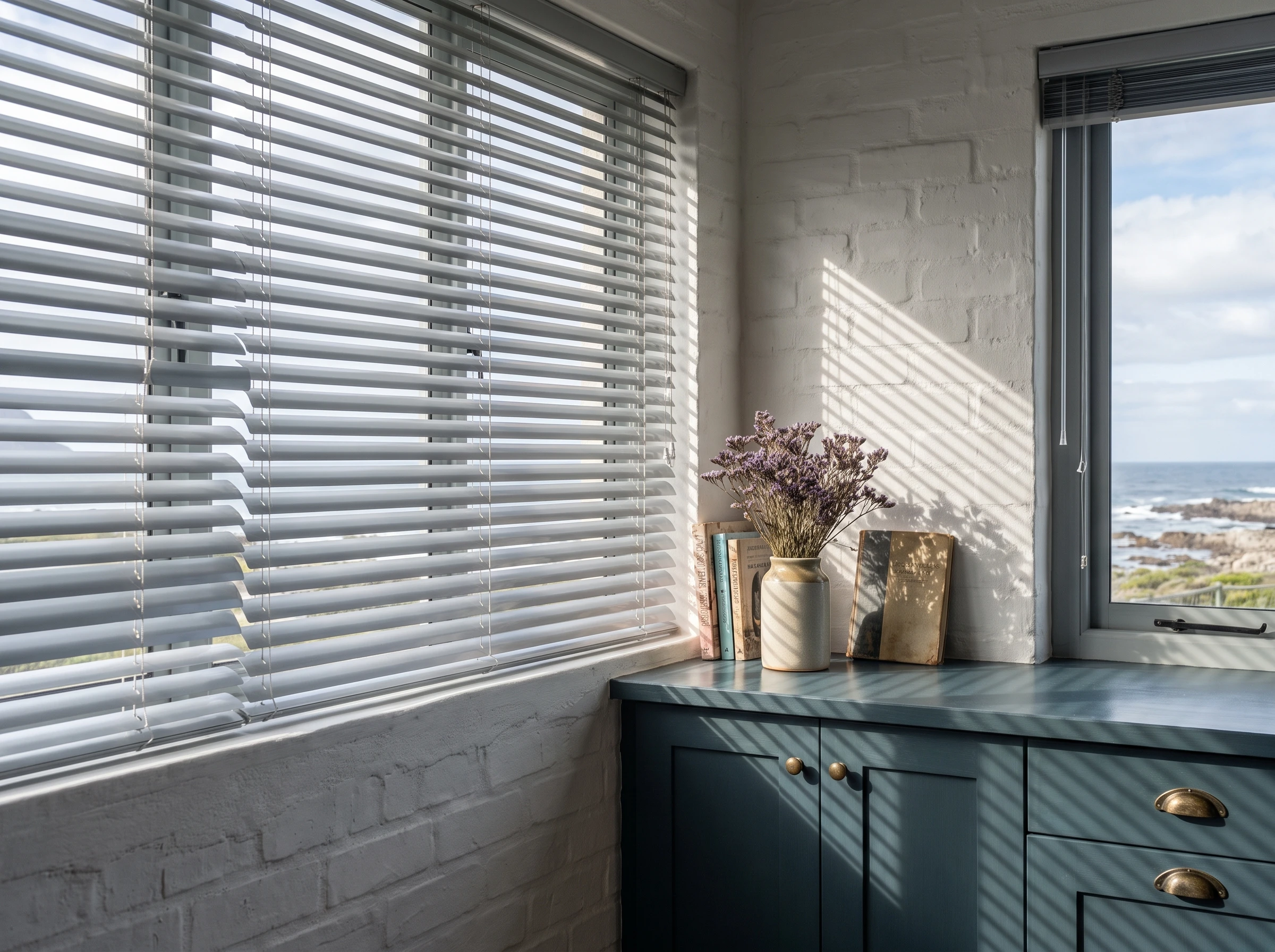 Cellular / honeycomb blinds
A pleated pocket of still air against winter fronts and February afternoons alike.
Cellular / honeycomb blinds
A pleated pocket of still air against winter fronts and February afternoons alike.
 Vertical & panel blinds
Big fabric panels that slide right off the glass when the view is the whole point of the room.
Vertical & panel blinds
Big fabric panels that slide right off the glass when the view is the whole point of the room.
 Concealed & recessed blinds
The blind lives in a ceiling slot and the glass line stays exactly as the architect drew it.
Concealed & recessed blinds
The blind lives in a ceiling slot and the glass line stays exactly as the architect drew it.
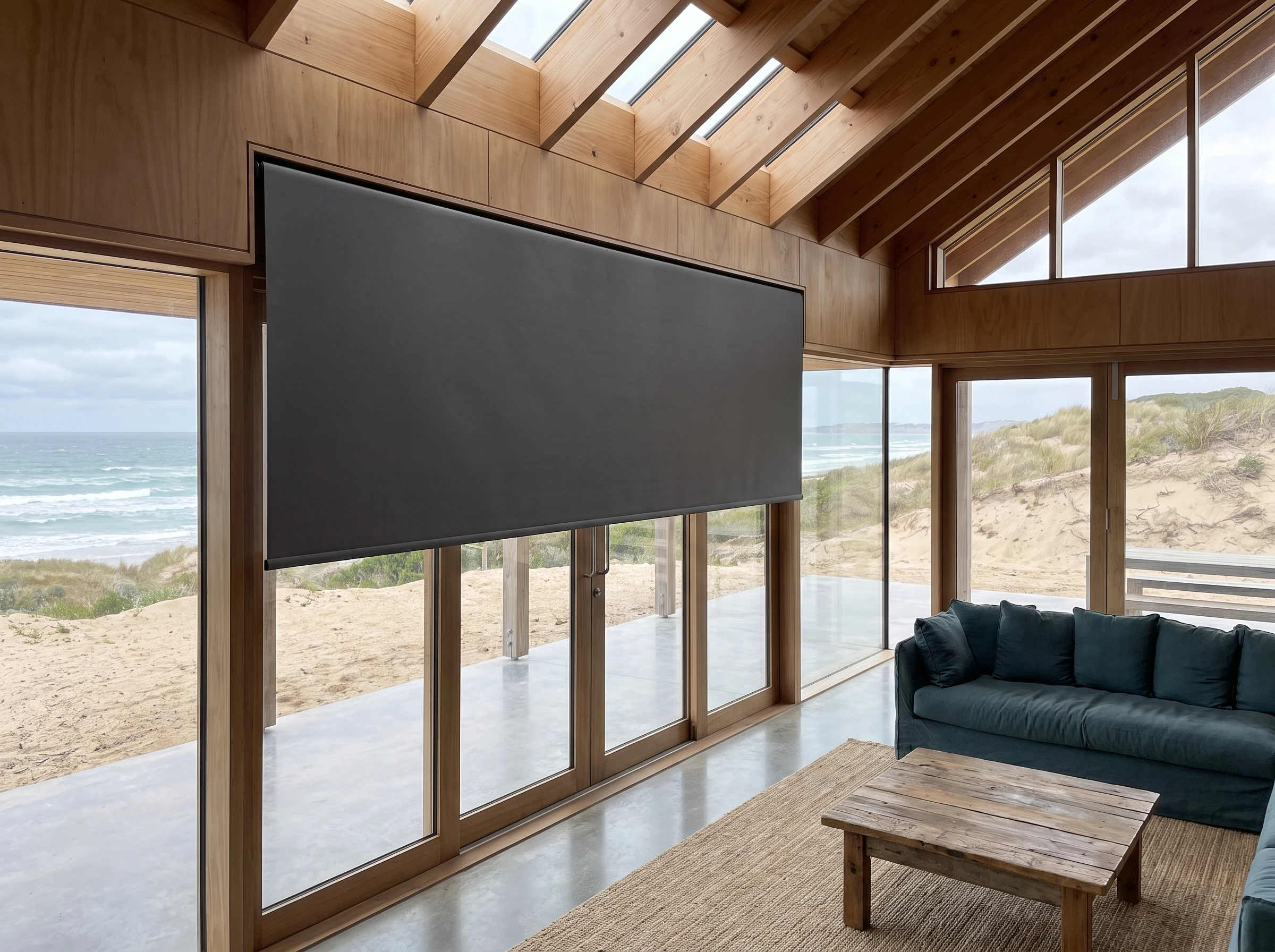 Skylight & shaped-window blinds
Tensioned fabric that holds flat on raked glass, gable ends and the odd triangle.
Skylight & shaped-window blinds
Tensioned fabric that holds flat on raked glass, gable ends and the odd triangle.
 Motorised blinds & automation
One button for the whole seaward wall — or a sensor that acts before you think to.
Motorised blinds & automation
One button for the whole seaward wall — or a sensor that acts before you think to.
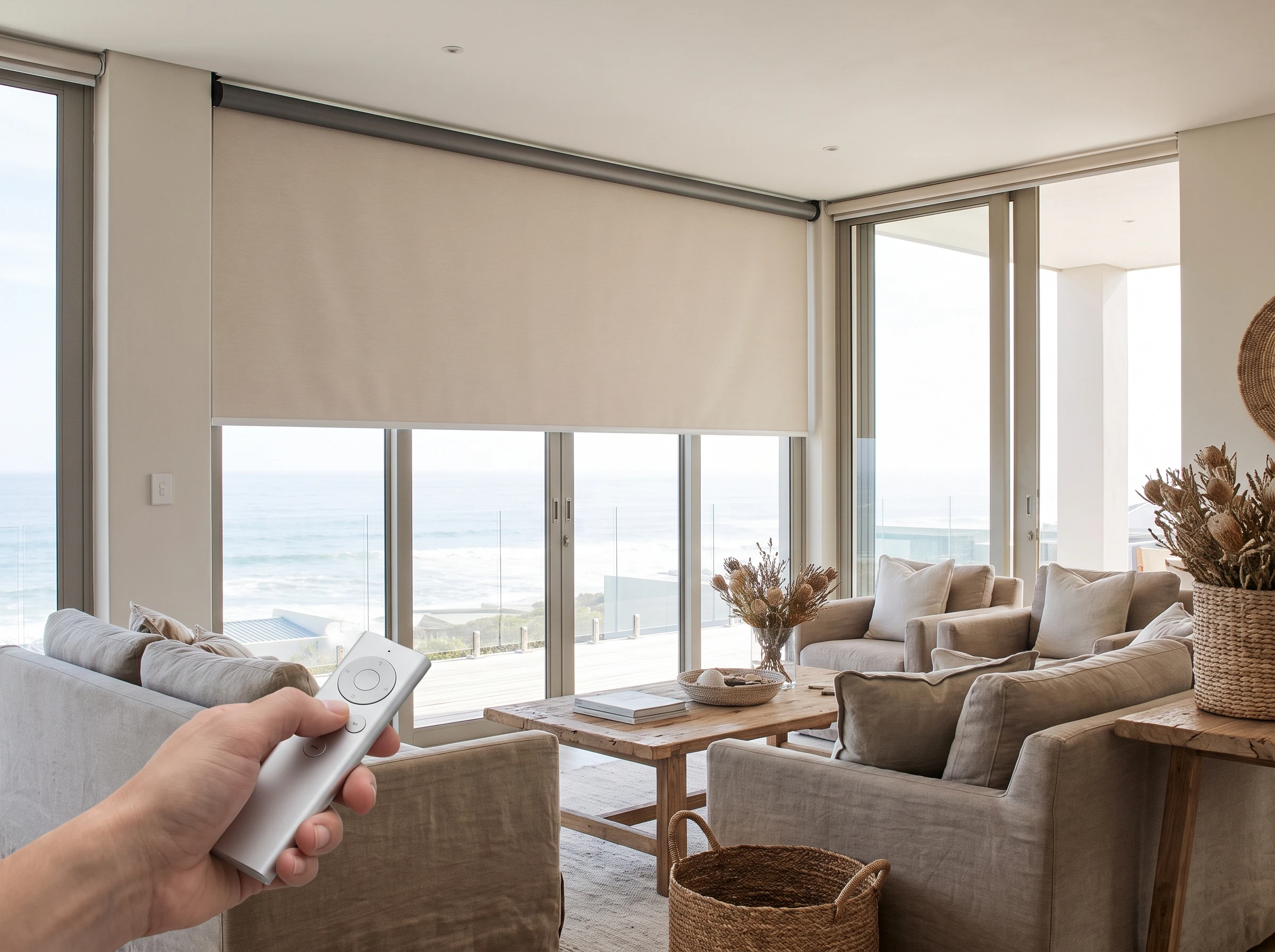 External venetians
Slats on the outside of the glass, so the afternoon heat never gets indoors at all.
External venetians
Slats on the outside of the glass, so the afternoon heat never gets indoors at all.
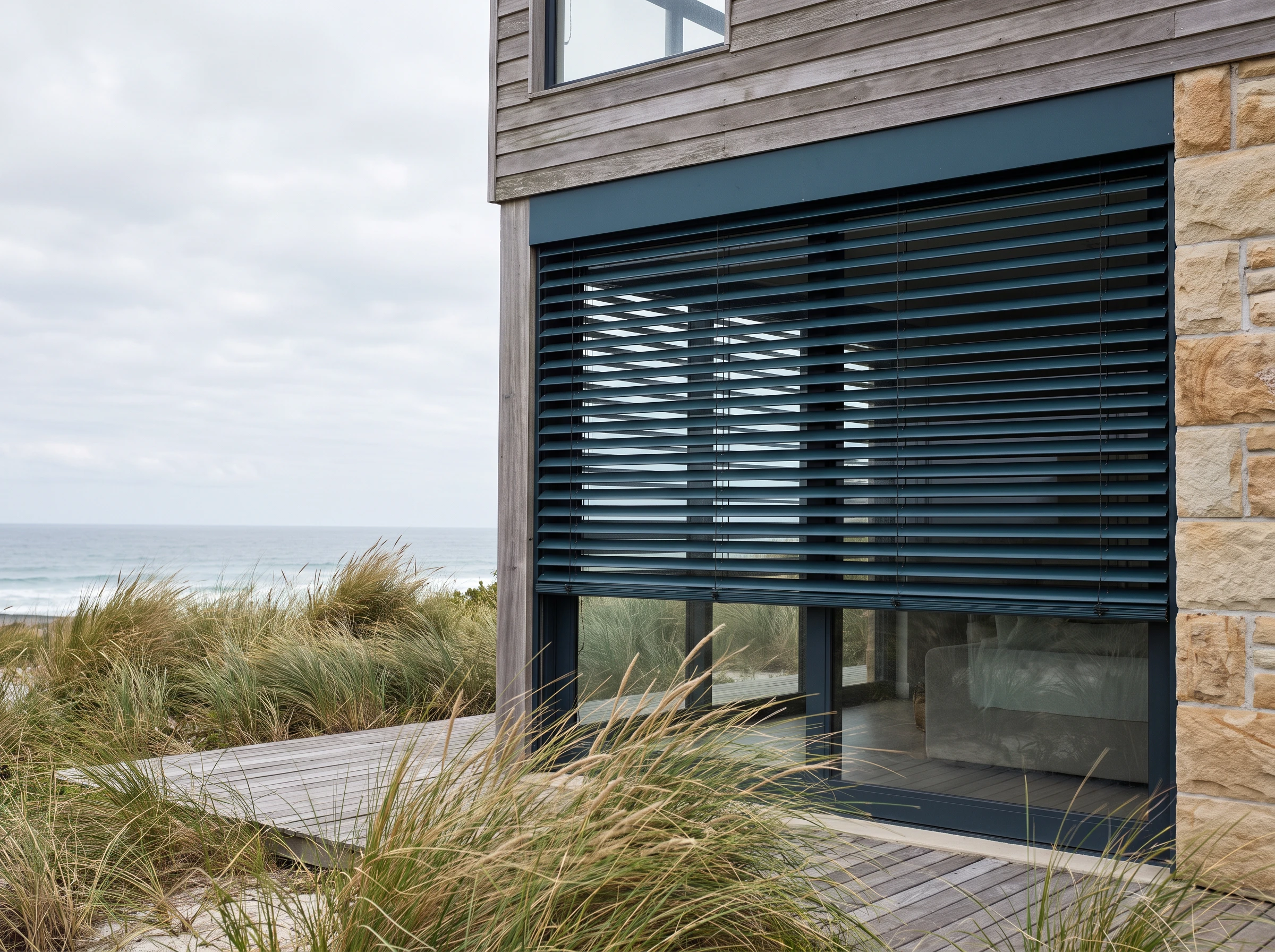 Roller shutters
Rigid aluminium over the outside of the window, for the sun the fabric shouldn’t have to fight alone.
Shading, not security. Our roller shutters manage sun, heat and glare on the outside of the glass. They are not security-rated shutters — that’s a different product, quoted on request.
Roller shutters
Rigid aluminium over the outside of the window, for the sun the fabric shouldn’t have to fight alone.
Shading, not security. Our roller shutters manage sun, heat and glare on the outside of the glass. They are not security-rated shutters — that’s a different product, quoted on request.
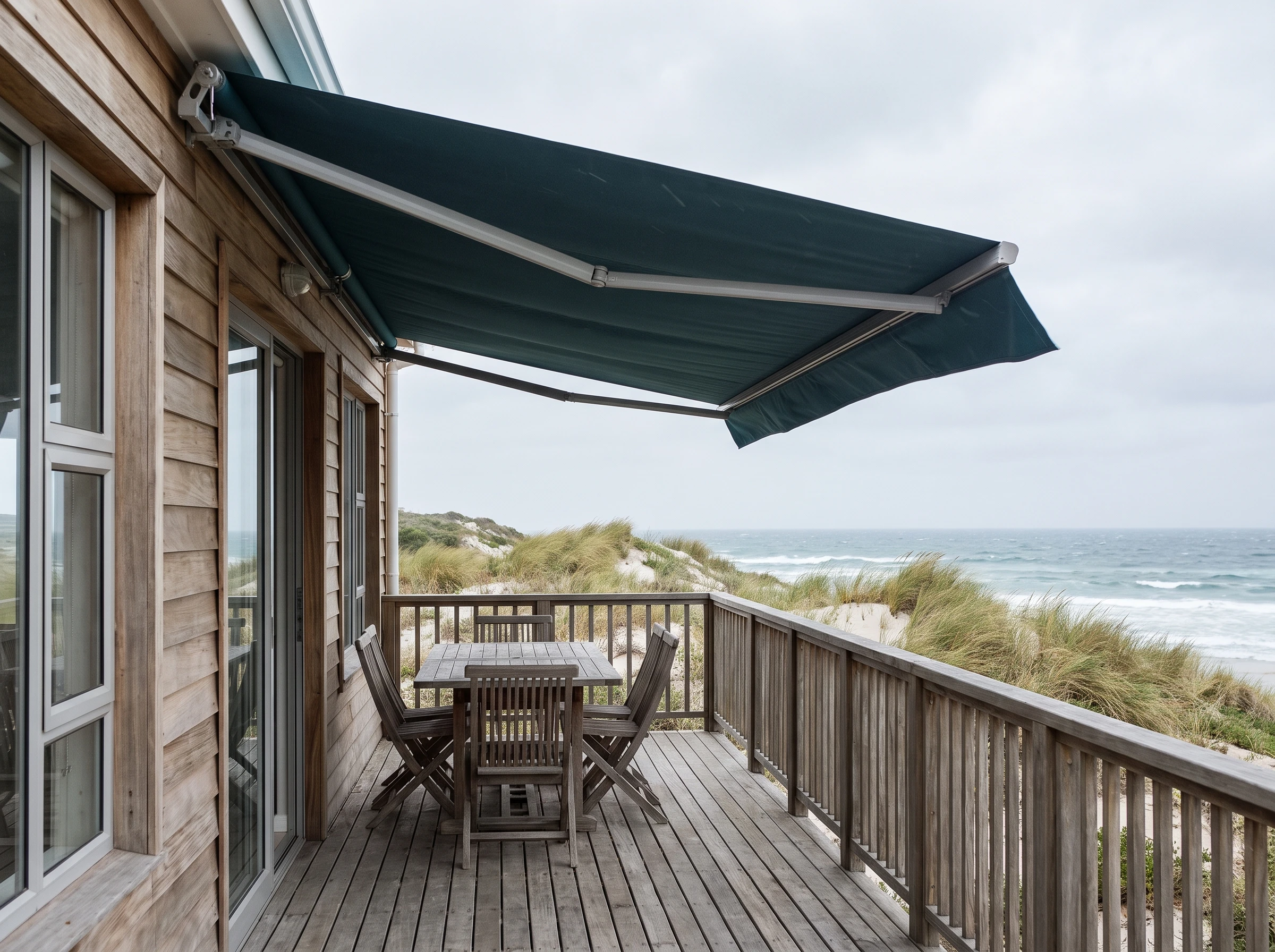
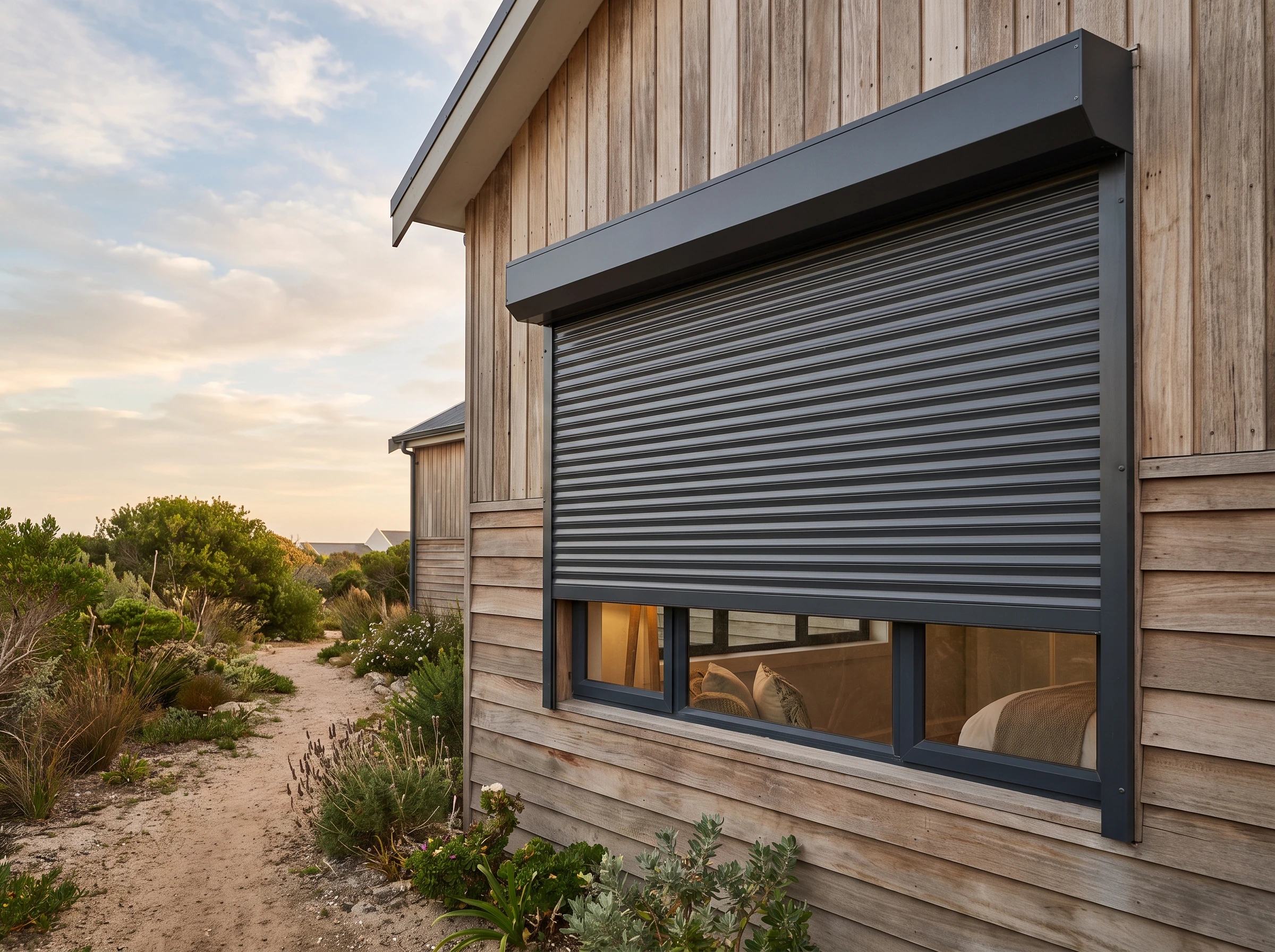 Folding-arm awnings
Deck shade that folds itself away the moment the wind sensor calls the gust.
Folding-arm awnings
Deck shade that folds itself away the moment the wind sensor calls the gust.
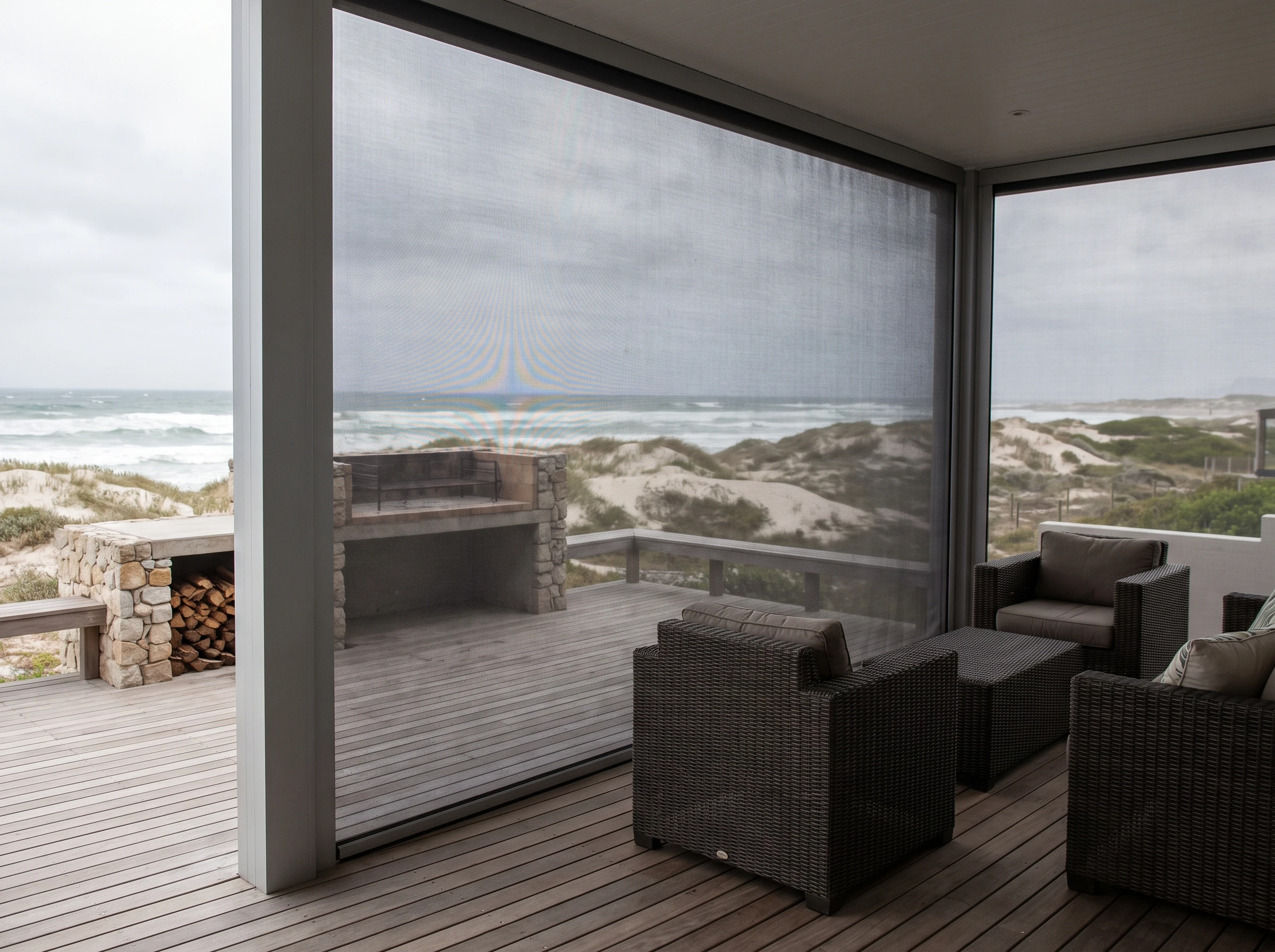
 Zip screens
Mesh zipped into side channels — the outdoor room that sits still while the milkwoods thrash.
Zip screens
Mesh zipped into side channels — the outdoor room that sits still while the milkwoods thrash.
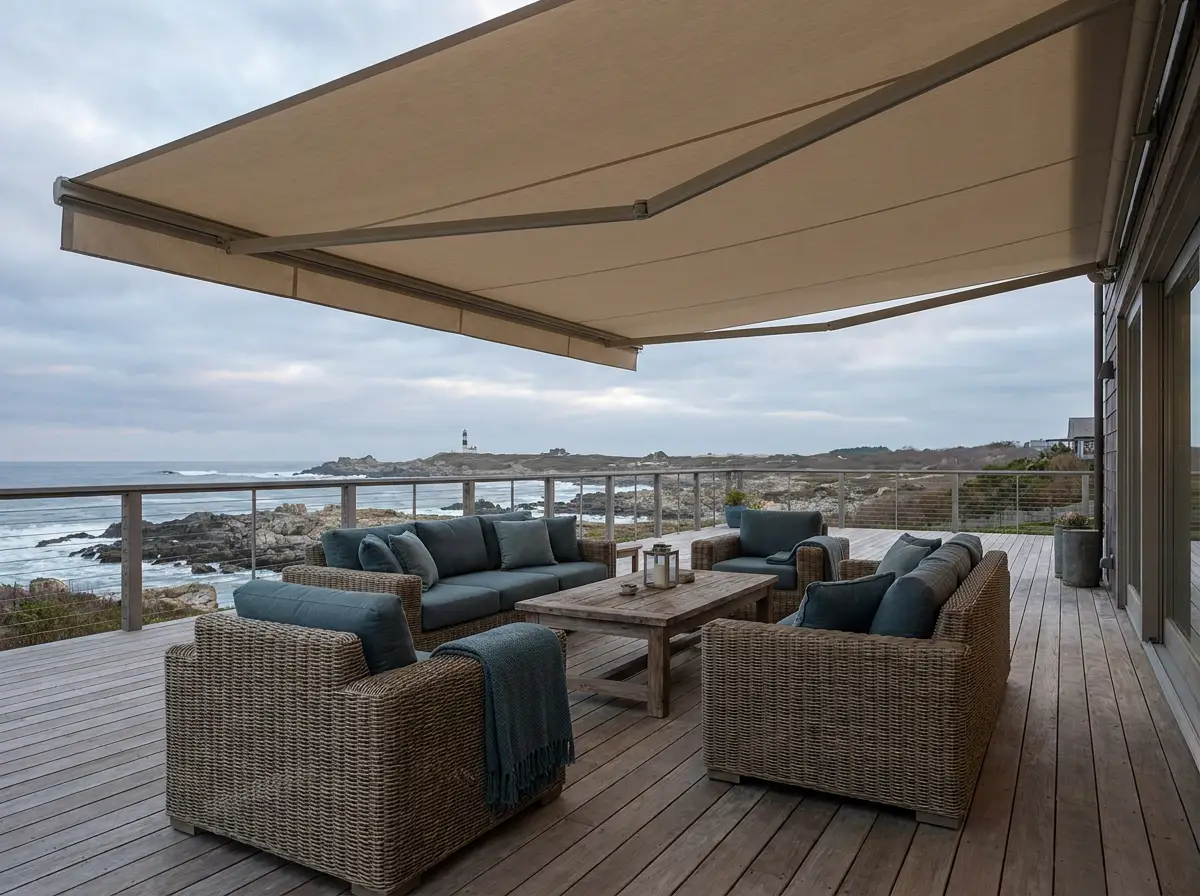
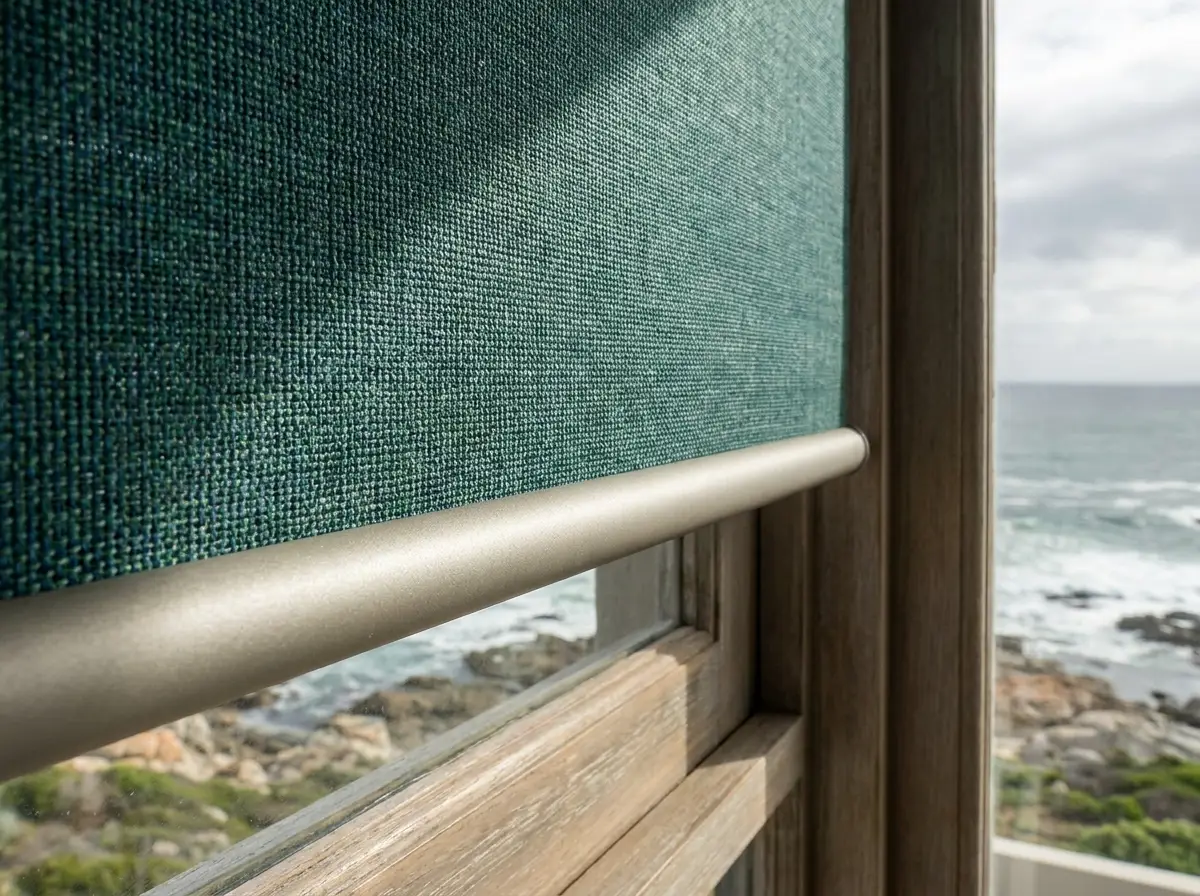
Three rooms, one village, no guesswork
What the index looks like once it’s hanging: a bedroom that softens the morning, a deck that answers the sensor before the gust, and the weave doing the quiet daily work in between.

Two houses a street apart can need two different specs. The wind decides — our job is to have listened before the quote goes out.Why the measure happens at your house, not over the phone
Named for a small basin. Specified for a big wind.
The village takes its name from the little rock basin on its shoreline — the Kom — and everything about shading a house here follows from what surrounds it. Long Beach runs north toward Noordhoek. The cast-iron lighthouse at Slangkop stands on the point to the south. Behind the houses, Table Mountain National Park and a protected dune belt press right up against the village edge.
What Kommetjie doesn’t have is height. No cliff, no stacked terraces, no lee side. The village lies low against its dunes, which means the weather arrives everywhere at once — a street-facing kitchen window works nearly as hard as a sea-facing one.
So we don’t estimate over the phone. A consultant stands at your actual windows, feels which way the glass faces, and writes the spec that elevation has earned.
Five questions we answer at your windows before we quote
Which way does it face?
Dune side, street side, or the awkward corner in between — each face of the house earns its own line on the quote.
What hits it?
Straight south-easter, winter north-wester, or mostly shelter — this decides whether an exterior product needs a sensor as well as a motor.
What’s over the fence?
National park, dune reserve or a neighbour’s milkwoods — boundary context shapes what’s simple to fit outside.
What’s the glass?
A punched cottage window and an architect’s floor-to-ceiling wall want different fabrics and different mounts.
What happens inside?
Sleeping, cooking, bathing or watching the sea — the room’s job picks blockout, sunscreen or wipe-down aluminium.
Four steps, none of them a surprise
The order never changes: talk, measure, price, fit. Nothing is cut until you’ve seen the number for every window in writing.
Say hello
Use the chat, the form or a call. A rough idea is plenty — the rooms, roughly how many openings, and whether wind is part of the story.
We come to you
A consultant arrives with fabric samples, measures every opening, and reads your exposure the way only standing at the glass allows. It costs nothing.
Read the numbers
A written quote, one line per window, options itemised. Take your time with it — there’s no obligation attached.
Made, hung, shown
Your order is manufactured to measure, fitted level, tested in front of you, and demonstrated before we pack up.
Money, since it belongs in the open rather than at the end: a metre squared of shading at the Kom costs between R1,000 and R7,500, fitted, according to the product and whether it runs on a motor. Small openings carry a floor price, and the number for each of your windows comes out of the measure, written down.
What we are, in one honest paragraph or three
Kommetjie Blinds measures, makes and fits window and deck shading at the Kom and along the coast beside it — Noordhoek, Simon’s Town, Kalk Bay and St James. Roller blinds, external venetians, folding-arm awnings and zip screens are all built to the sizes taken at your own openings, and specified for wind and salt before anyone talks about colour. There is no showroom and no shelf stock, because a village where the spray reaches every street has no use for a standard-size blind.
Every job runs in the same order. You use the chat or the form, and one of our expert consultants will contact you shortly to arrange a free in-home measure. That visit is where the exposure gets read properly, every opening measured, and fabric, weave and drive settled room by room. A written quote follows with one line per window, and nothing is cut until you have seen and accepted it. Then it is manufactured to measure, fitted level, tested in front of you and demonstrated before we pack up.
Whatever you send with your enquiry is used to arrange that call-back and for nothing else, handled under POPIA.
The Kom, and the coast either side of it
Home base is Kommetjie; the measuring tape travels over Ou Kaapse Weg way less often than it travels the Deep South coast road.
Before you enquire
What does “wind-rated” actually mean when it appears on our quote?
It means the exterior product — awning, zip screen or shutter — is engineered and mounted to handle genuine coastal wind loads rather than fair-weather use, and that anything exposed gets a sensor to retract it automatically when a gust arrives. At the measure we tell you which of your elevations need that rating and which honestly don’t, so you’re not paying for wind-proofing a sheltered courtyard.
Our deck takes the south-easter straight off Long Beach. Is an awning even sensible?
Often yes — with the right conditions attached. A folding-arm awning on a truly exposed face needs a wind sensor so it retracts itself the moment the gust arrives, whether you’re home or not. Where an elevation is simply too exposed for any awning to live happily, we say so at the measure and suggest zip screens or interior options instead. An honest “not here” is part of the service.
Do you fit the older cottages too, or only the newer glass-walled builds?
Both, constantly. A thick-walled older cottage with deep reveals and timber frames takes a different mount and often a different product to an architect-built wall of glass — that’s exactly why everything is measured and made per window rather than pulled off a shelf. The consultant will show you options against your actual reveals at the measure.
We’re only at the house some weekends. Can the measure and fitting work around that?
Yes. Plenty of Kommetjie homes are weekend and holiday places, so measures and installations get scheduled for when you’re actually here — tell us your pattern in the enquiry and the consultant will plan the visits around it. Motorised products with app control are also worth considering for a house that stands empty midweek.
What will salt air honestly do to blinds and hardware over time?
Left unmanaged, salt corrodes cheap fittings quickly — anywhere in this village, not just on the beachfront row. Our coastal standard is powder-coated aluminium components and sealed cassettes on exterior products, which changes the timescale from years to decades. We’ll still tell you plainly: an occasional fresh-water rinse of exterior hardware is the cheapest maintenance you’ll ever do here.
Small children in the house — what do you change?
By default, every chain or cord loop is anchored taut to the wall with a tensioner. Beyond that, we’ll steer nurseries and kids’ rooms toward cordless, wand-operated or motorised options, which remove the loop entirely. Mention little ones in your enquiry and the consultant will bring the child-safe samples along.
Put a consultant in front of your glass.
The measure is free, the quote is written per window, and the wind gets factored in before the fabric does.
Start with whatever you know
Three windows or thirty, certain or just curious — send it through and one of our expert consultants will contact you shortly to arrange your free in-home measure.